In this guide (11 sections)
- Our top picks
- How Tall Should a Tripod Be for Your Height? The Short Answer
- Tripod Height Chart by Your Height
- What Tripod Height Do You Need if You Are 6 Feet Tall?
- How Is Tripod Height Measured on a Spec Sheet?
- Tripod Height and the Center Column: Should You Extend It?
- Other Factors That Change the Tripod Height You Need
- How to Measure the Right Tripod Height for You
- Tripods That Fit Different Heights
- Next Steps
- Questions photographers ask
We earn a commission if you buy through links on this page, at no extra cost to you. It never changes what we recommend. How we make money.
How we picked these
- 9 owner posts, user discussions and expert reviews read across 5 sources.
- Every spec checked against 6 maker and retailer pages.
- We did not test these products ourselves, and we say so. All sources are linked at the end of this guide.
Our top picks
 Best for tall shooters · 3.9/5Manfrotto 055 Aluminum 3-Section Tripod (MT055XPRO3)
 Best tall tripod with head included · 4.0/5Vanguard Alta Pro 2+ 263AB Gen 2 (with BH-60 ball head)
The short answer
- Rule of thumb: the tripod legs alone (center column down) should reach about your height minus 10 to 12 inches, because eye level sits 4 to 5 inches below your height and the head plus camera add another 5 to 8 inches.
- A 6-foot photographer needs roughly 60 to 61 inches of tripod height without the center column to put the viewfinder at eye level.
- Shop by the "height without center column" spec, not the headline maximum height, which usually includes the raised column.
- Raise the legs first and the column last; every inch of column adds a single, thin, leverage-prone point that shakes more in wind.
“How tall should a tripod be for my height?” is one of the most common questions new tripod buyers ask. Tripod height comes down to one quick answer: the tripod’s legs alone, with the center column down, should reach roughly your height minus 10 to 12 inches. I build every height recommendation from that rule of thumb, because it puts the camera viewfinder at eye level without leaning on the weakest part of the tripod. Below I show the math, a height chart from 5 feet to 6’6”, why raising the center column costs stability, and two tall tripods that hit the mark.
How Tall Should a Tripod Be for Your Height? The Short Answer
Tripod height without the center column should be about your standing height minus 10 to 12 inches. That leaves room for the head and camera so the viewfinder lands at your eye level.

Tripod height on a spec sheet stops at the top plate (the flat platform where the tripod head mounts), not at your eye. Your eye level sits about 4 to 5 inches below the top of your head, and a tripod head (the ball or pan-tilt mount that holds and aims the camera) plus the camera body and its viewfinder usually add another 5 to 8 inches above the plate. Stack those two numbers and you get the 10 to 12 inch gap.
Eye level is the target because it is the posture you can hold for an hour. I’d rather stand up straight at a viewfinder than hunch over it at sunset, and so would your lower back. A setup a couple of inches below eye level is fine; a setup 8 inches below gets tiring quickly.
Tripod Height Chart by Your Height
The eye level tripod height chart below converts your height into the legs-only height to look for. Treat it as a rule of thumb, not a guarantee, because heads and cameras vary.

Here is the math I used for every row, so you can check it or redo it for your own kit:
- Start with your standing height.
- Subtract about 4.5 inches (the middle of the 4 to 5 inch eye offset) to get eye level.
- Subtract about 6.5 inches (the middle of the 5 to 8 inch head and camera range) to get the tripod height without the center column.
The table compares photographer height with estimated eye level and the suggested tripod height without the center column.
| Your height | Eye level (height − ~4.5 in) | Suggested tripod height without center column (eye level − ~6.5 in) |
|---|---|---|
| 5’0” (60 in / 152 cm) | ~55.5 in / 141 cm | ~49 in / 124 cm |
| 5’4” (64 in / 163 cm) | ~59.5 in / 151 cm | ~53 in / 135 cm |
| 5’8” (68 in / 173 cm) | ~63.5 in / 161 cm | ~57 in / 145 cm |
| 6’0” (72 in / 183 cm) | ~67.5 in / 171 cm | ~61 in / 155 cm |
| 6’3” (75 in / 191 cm) | ~70.5 in / 179 cm | ~64 in / 163 cm |
| 6’6” (78 in / 198 cm) | ~73.5 in / 187 cm | ~67 in / 170 cm |
Adjust for your own gear. A compact ball head and a small mirrorless body sit near the 5 inch end, so add an inch or two to the suggested number. A tall pan-tilt or fluid head with an L-bracket and a DSLR with a battery grip sits near the 8 inch end, so you can subtract a little. Ulanzi’s tripod height guide uses the same eye-level logic if you want a second explanation.
What Tripod Height Do You Need if You Are 6 Feet Tall?
Tripod height for a 6-foot photographer should be about 60 to 61 inches without the center column for a true eye-level viewfinder.

That number surprises people, because few full-size tripods reach 60 inches on legs alone. Most of the sturdy aluminum models I compare land around 55 inches with the column down, which puts a 6-foot shooter’s viewfinder roughly 5 to 6 inches below eye level. That is a slight stoop, or a few inches of column, not a deal breaker.
For a tripod height for a tall person at 6’3” and up, the gap grows to 9 to 12 inches on a 55 inch tripod. At that point I would look specifically for a taller legs-only figure, accept using the column for the last few inches on calm days, or lean on a tilting screen.
You don’t always need the tallest tripod available, though. Taller legs mean longer, heavier tubes, a longer folded length and thinner bottom sections. If you mostly shoot landscapes from low vantage points, a slightly shorter, steadier tripod can be the better tool.
How Is Tripod Height Measured on a Spec Sheet?
Tripod height, as a maximum figure, is usually measured to the top plate with every leg section and the center column fully extended. The head and camera are not included.

That means the headline number on a box often overstates your real working height. The difference between maximum height and the tripod height without center column often runs 10 to 30 cm on spec sheets, because the column itself is a long tube. The Manfrotto 055 shows this clearly: about 140 cm (55 in) legs-only versus about 170 cm (67 in) with the column fully raised, per retailer specs.
So the height without center column is the number I shop by. It tells you how tall the tripod is when it is at its steadiest. Then add your head and camera height on top to see where the viewfinder ends up.
Tripod Height and the Center Column: Should You Extend It?
Extend the legs first and the center column last, and only by a few inches when you can avoid it. A raised column turns a wide, three-legged base into a single thin post.
The center column is the vertical tube in the middle of the tripod that slides up for extra height. Here is why raising it reduces stability:
- Leverage: the higher the column rises above the leg apex, the longer the lever that wind, a shutter or your hand can act on.
- One support instead of three: the legs brace the camera from three spread points; the column is held only by a collar at the apex, so it can flex and twist.
- Thinner tube: the column is narrower than the combined leg stance, so vibrations take longer to settle.
- Wind stability: more height catches more wind, and a long lens adds sail area at the very top.
The O’Reilly-published Landscape Photography Book puts it bluntly in its chapter on avoiding the center column. I agree with that advice for long exposures and long lenses. For a quick snapshot on a still day, an inch or two of column is fine.
From our notes: When I lined up the spec sheets for this guide, the first thing I noticed was how often “maximum height” hid the center column. The Manfrotto 055 lists about 67 inches with the column raised, yet its legs-only height is about 55 inches, a 12 inch difference. The Vanguard Alta Pro 263AB Gen 2 was trickier: its column-up height differed between retailer listings, so I ignored that figure and used Adorama’s legs-only number of about 55 inches instead. That is exactly why our chart is built on height without the center column.
Other Factors That Change the Tripod Height You Need
Tripod height needs shift with your shooting style, tripod type and camera screen as much as with your own height.
These are the factors I weigh before picking a number from the chart:
- Landscape: often shot from chest height or lower, so eye level matters less than minimum height and stability.
- Portrait and events: eye level or slightly above flatters subjects and matches your natural viewpoint.
- Video tripod use: standing interviews need the lens near the subject’s eye line, so tall shooters want full height on the legs and a fluid head.
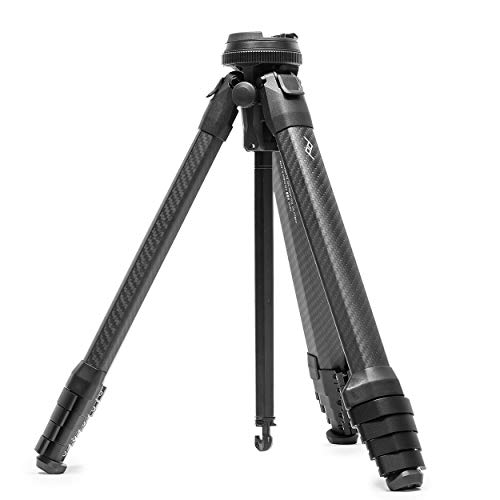
- Travel tripod or full-size: compact travel tripods, a category that includes the Peak Design Travel Tripod, fold short with more leg sections, and many need the column raised to approach eye level.
- Carbon fiber tripod or aluminum tripod: carbon fiber keeps tall legs lighter and damps vibration better; aluminum is the cheaper way to get height but weighs more.
- Viewfinder versus tilting screen: a fold-out screen lets you shoot comfortably several inches below eye level; a fixed viewfinder does not.
- Minimum height and leg angle: wide leg angle settings (the legs spread flatter at a preset stop) and a horizontal or inverted column help low-angle and macro work.
- Folded length and weight: a tripod that reaches 60 inches on its legs will not fold small enough for every daypack or carry-on.
How to Measure the Right Tripod Height for You
Tripod height for your exact kit is easy to find: you can work it out your own target tripod height in about a minute with a tape measure.
- Stand straight against a wall in the shoes you shoot in and mark your eye level.
- Measure the floor-to-mark distance.
- Mount your camera on your head, measure from the bottom of the head’s base to the center of the viewfinder.
- Subtract step 3 from step 2. That is the height without the center column to look for.
- Compare it with the legs-only figure on the spec sheet, not the maximum height.
I keep this number in my phone notes, because it makes every spec sheet comparison faster. Our tripod buying checklist covers the other specs to compare alongside it.
Tripods That Fit Different Heights
Both tripods below reach about 55 inches without the center column, which suits photographers up to roughly 5’6” at true eye level and taller shooters with a small stoop or a little column.
I picked these two because their legs-only heights are published and they rank well on the height criterion in how we score tripods. Their scores come from manufacturer specs and retailer listings, not hands-on use.
Manfrotto 055 Aluminum 3-Section Tripod (MT055XPRO3): Best for tall shooters
3.9Best Tripod Score out of 5
- Stability8/10
- Portability (weight and folded length)6/10
- Working height9/10
- Build (materials, leg locks, head)8/10
- Value8/10
Eye level with the column down and a low-angle option; heavy and long folded.
What owners and reviewers say from 5 reviews and posts we read
Praised for
- Very sturdy and well built, described as solid as a rock
- Good value for the stability
- Steady in wind and quick to level thanks to the rotating head-plate level
Common complaints
- Not light to carry
- Included head in bundles rated lower than the legs
Read on: Adorama: Manfrotto 055 tripod listing · Adorama: Manfrotto 055 kit · B&H customer reviews
Who it's for: Taller photographers with a DSLR or mirrorless kit and a mid-size zoom who want eye level without raising the column; legs only, so add a head.
The Manfrotto 055 Aluminum 3-Section Tripod (MT055XPRO3) is the pick I’d point a taller photographer to first, because it reaches about 140 cm (55 in) on its three aluminum leg sections alone, according to retailer specs. Using the chart math, that puts a 5’6” photographer at eye level with the column down, and with the column fully raised the tripod reaches about 170 cm (67 in) for occasional extra height. The center column also swings horizontal, which pairs with a minimum working height of about 9 cm (3.5 in) for low-angle and macro work, so you are not trading low reach for tall reach. The downsides are real: the legs alone weigh around 2.5 kg (5.5 lb), the folded length is about 61 cm (24 in), and it is sold as legs only, so you will need to buy a head separately and add its height to your calculation. It suits DSLR or mirrorless shooters with a mid-size zoom who care more about eye level than carry weight.
Vanguard Alta Pro 2+ 263AB Gen 2 (with BH-60 ball head): Best tall tripod with head included
4.0Best Tripod Score out of 5
- Stability8/10
- Portability (weight and folded length)6/10
- Working height9/10
- Build (materials, leg locks, head)8/10
- Value9/10
Eye level with the column down and a head included; long when folded.
What owners and reviewers say from 4 reviews and posts we read
Praised for
- Sturdier than the original Alta Pro, redesigned center column stays firm horizontally
- Good build quality for the money, multi-angle column helps low and macro shots
Common complaints
- Takes practice to learn all the knobs
- Questionable how comfortable it is to carry
Read on: Adorama: Vanguard Alta Pro 2+ 263AB · Park Cameras: Vanguard Alta Pro 2+ 263AB100
Who it's for: Taller photographers who want eye-level height and a head in one box; check you're buying the Gen 2 listing.
The Vanguard Alta Pro 2+ 263AB Gen 2 (with BH-60 ball head) gives you a similar legs-only height with a head already in the box. Adorama lists it at about 55 in (140.5 cm) without the center column, on 26 mm aluminum legs with three sections, and it carries a 22 lb (10 kg) rated load, which leaves plenty of margin for a full-frame body with a 70-200mm f/2.8. Treat that rating as the maker’s claim and keep your working load well below it, especially with the column up. The included BH-60 ball head saves a separate purchase, though it adds its own few inches to the total height. On the downside, it weighs about 2.3 kg (5.1 lb) and folds to 27.4 in, which is long for a carry-on, and the max height with the column differs between retailers, so I rely on the legs-only figure. Check that the listing says Gen 2 before you order.
Next Steps
Work out your number with the chart or the tape-measure method, then shop by height without the center column.
If I had to sum this guide up in one line, it would be: buy the legs for your eye level and save the column for emergencies. Next, run through our tripod buying checklist to match that height with load capacity, folded length and leg locks for the way you shoot.
Questions photographers ask
What height tripod do I need if I am 6 feet tall?
At 6 feet (72 inches), your eye level is roughly 67 to 68 inches. Subtract about 5 to 8 inches for the head and camera and you want around 60 to 61 inches of tripod height without the center column to shoot at eye level without stooping.
Should I extend the center column on my tripod?
Extend the legs fully first and use the center column only for the last few inches. A raised column puts the camera on a single thin post that flexes and vibrates more than three spread legs, which shows up in wind and with long lenses.
Does the maximum height on a tripod spec sheet include the head?
Usually not. Most makers measure maximum height to the top plate, often with the center column raised, so the head and camera add several inches on top. Look for the separate "without center column" figure.
Is a taller tripod less stable?
Height itself costs some stability, because thinner lower leg sections and a longer lever let wind and touch move the camera more. A tripod that reaches eye level on its legs alone is still steadier than a shorter one pushed up on its center column.
Does a tripod need to reach eye level?
Not strictly. Many landscape shots look better from lower, and a tilting screen lets you work below eye level comfortably. Eye level matters most if you use a viewfinder for long sessions, since a short tripod means hunching over every frame.
Why you can trust this guide
- Products are checked against manufacturer specifications, user manuals and long-term owner reports.
- Each pick is scored on the Best Tripod Score: stability, portability (weight and folded length), working height, build quality and value.
- We never accept payment for placement. Affiliate commissions do not affect rankings.
Last reviewed . Read our research process and editorial policy, or report an error.
Sources
- Manfrotto MT055XPRO3 (B&H)
- Manfrotto MT055XPRO3 specs (Procam)
- Vanguard Alta Pro 263AB Gen 2 (Adorama)
- Vanguard Alta Pro 263AB Gen 2 (B&H)
- What is a Good Tripod Height? (Ulanzi)
- Avoid Using the Center Column (The Landscape Photography Book, O'Reilly)
Reviews and discussions we read

Best Tripod Editorial Team
Research & editorial
We research tripods, monopods and heads for photographers and video creators: real working height with and without the center column, load capacity against the gear you actually shoot, packed length for a carry-on, leg-lock speed and Arca-Swiss compatibility. Every guide follows our published research process and editorial policy.